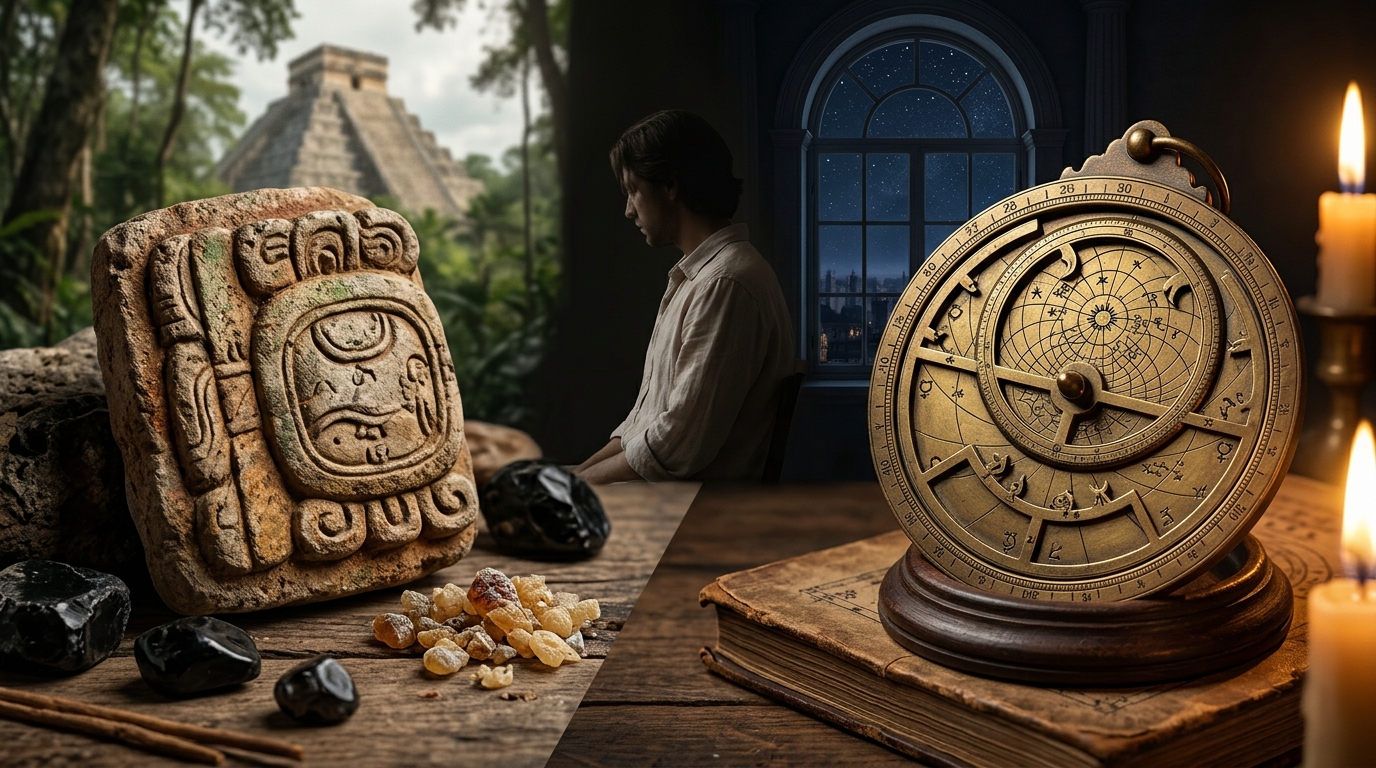
The Mayan Tzolkin and the Western zodiac are fundamentally different mapping systems. The Tzolkin is a 260-day sacred calendar based on day signs and tones, while the Western zodiac is a 360-degree solar wheel divided into twelve signs. My Mayan Sign uses the Tzolkin to provide a precise, day-based reading that focuses on innate character traits rather than sun position. This article compares the structural mechanics of both systems to help you understand which framework aligns with your curiosity.
Tzolkin Structure
The Tzolkin is a 260-day ritual calendar used by the Maya. It combines 20 day signs with 13 galactic tones. This creates a unique cycle of 260 days before the pattern repeats. Unlike the Western system, the Tzolkin does not rely on the position of the sun in the sky. Instead, it tracks the day of your birth to determine your core energy. My Mayan Sign calculates this using the K'iche' day count, which is the traditional Mayan method. This approach separates the Tzolkin from modern inventions like the Dreamspell. The focus is on the specific day sign and tone combination that defines your personality. For additional details, review the Mayan Astrology FAQ.
Day Signs and Tones
Each day in the Tzolkin has a specific name and a number from one to thirteen. The day sign represents the core essence, while the tone indicates the intensity or expression of that essence. For example, a day sign might represent wisdom, while the tone determines if that wisdom is expressed gently or forcefully. This dual-layer system provides a nuanced view of character. It allows for a more granular analysis than a single sun sign. To access your detailed report, you can sign in to your account.
Western Zodiac Structure
The Western zodiac is a 360-degree circle divided into twelve equal segments. Each segment corresponds to a specific date range in the solar year. The system is heliocentric, meaning it tracks the sun's apparent path through the constellations. Your sun sign is determined by the date you were born. This system also includes moon signs and rising signs, which add layers of complexity. However, the primary focus remains on the sun sign. The Western zodiac is deeply tied to the tropical year and the seasons.
Sun, Moon, and Rising
Western astrology often looks at three main components. The sun sign represents your ego and core identity. The moon sign represents your emotional needs. The rising sign represents your outward appearance. This triad provides a comprehensive psychological profile. It is a well-established system with centuries of historical data. The structure is fixed and does not change based on lunar cycles or ritual counts.
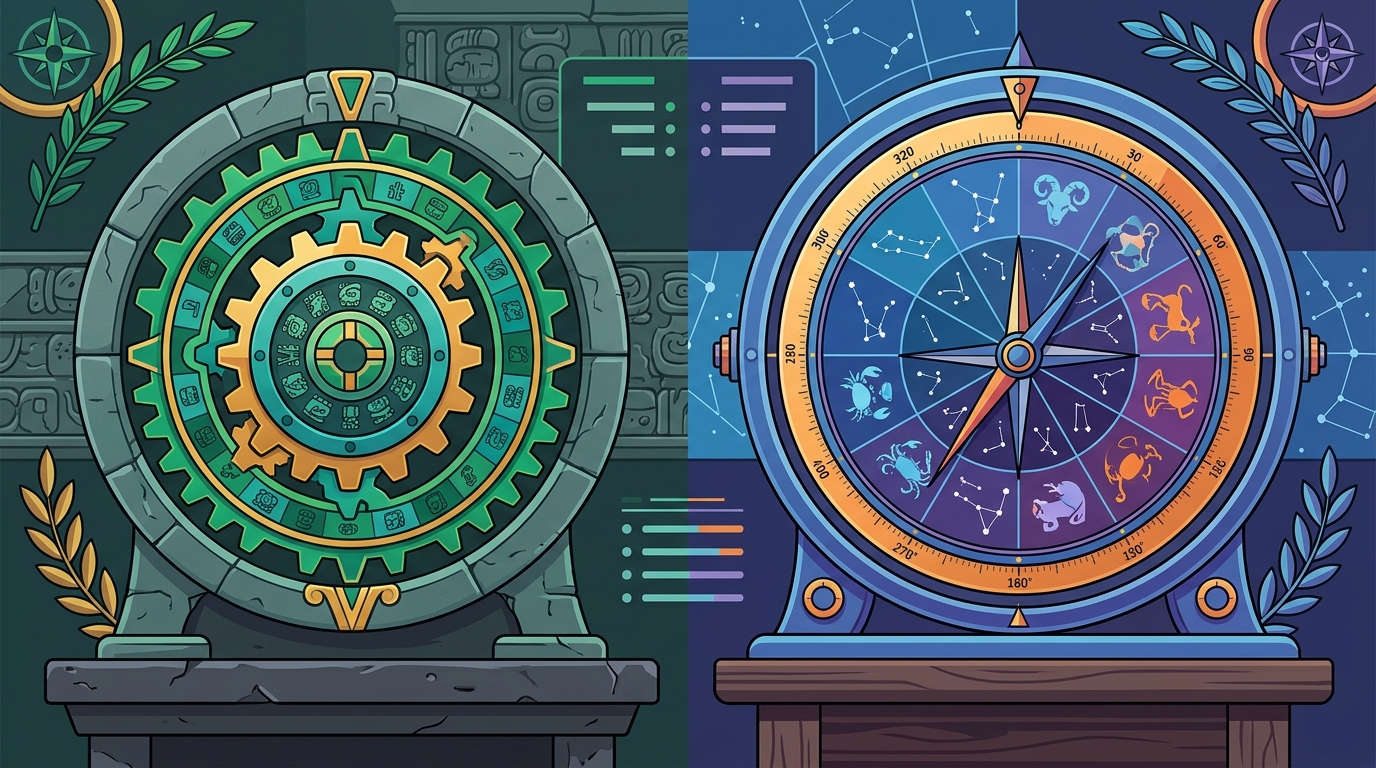
Comparison Table
| Criteria | Mayan Tzolkin | Western Zodiac |
|---|---|---|
| Calendar Length | 260 days | 365 days (Solar Year) |
| Primary Basis | Day Sign and Tone | Sun Position in Constellation |
| Number of Signs | 20 Day Signs | 12 Sun Signs |
| Time Requirement | Birth Date Only | Birth Date, Time, and Location |
| Historical Origin | Pre-Columbian Mesoamerica | Ancient Babylon and Greece |
| Focus | Innate Character and Soul | Psychological and Seasonal Patterns |
Choose Tzolkin If
Choose Western If
Choose the Western zodiac if you want a detailed psychological profile. The inclusion of moon and rising signs allows for a deeper dive into emotional and social dynamics. It is also the more widely recognized system in popular culture. If you are used to reading horoscopes in magazines or apps, the Western system will feel familiar. It is best for those who want to understand seasonal influences and planetary transits. The Western system is robust and has a vast amount of literature available.
Frequently Asked Questions
Do I need my birth time for the Tzolkin?
No, you do not need your birth time for the Tzolkin. The system is based on the calendar date of your birth. This is a significant advantage for people who do not have access to their birth records. My Mayan Sign calculates your sign using only the day, month, and year of your birth.
Can I have both a Tzolkin sign and a Western sign?
Yes, you can have both. They are independent systems based on different astronomical and cultural frameworks. Many people explore both to get a fuller picture of their personality. There is no conflict between the two, as they measure different aspects of human experience.
Is the Tzolkin the same as the Dreamspell?
No, the Tzolkin is not the same as the Dreamspell. The Dreamspell is a modern interpretation created in the 1990s. The traditional Tzolkin is based on the K'iche' day count used by the Maya. My Mayan Sign follows the traditional K'iche' method, not the Dreamspell.
Which system is more accurate?
Accuracy depends on what you are looking for. The Western zodiac is precise in tracking solar positions. The Tzolkin is precise in tracking ritual cycles and day signs. Neither is inherently more accurate than the other; they serve different purposes and have different historical roots.
Can I switch between systems easily?
Yes, you can explore both systems easily. There is no commitment required to use either. You can calculate your signs in both systems and see which resonates more with your lived experience. My Mayan Sign makes it easy to start with the Tzolkin and compare it to your Western sign.