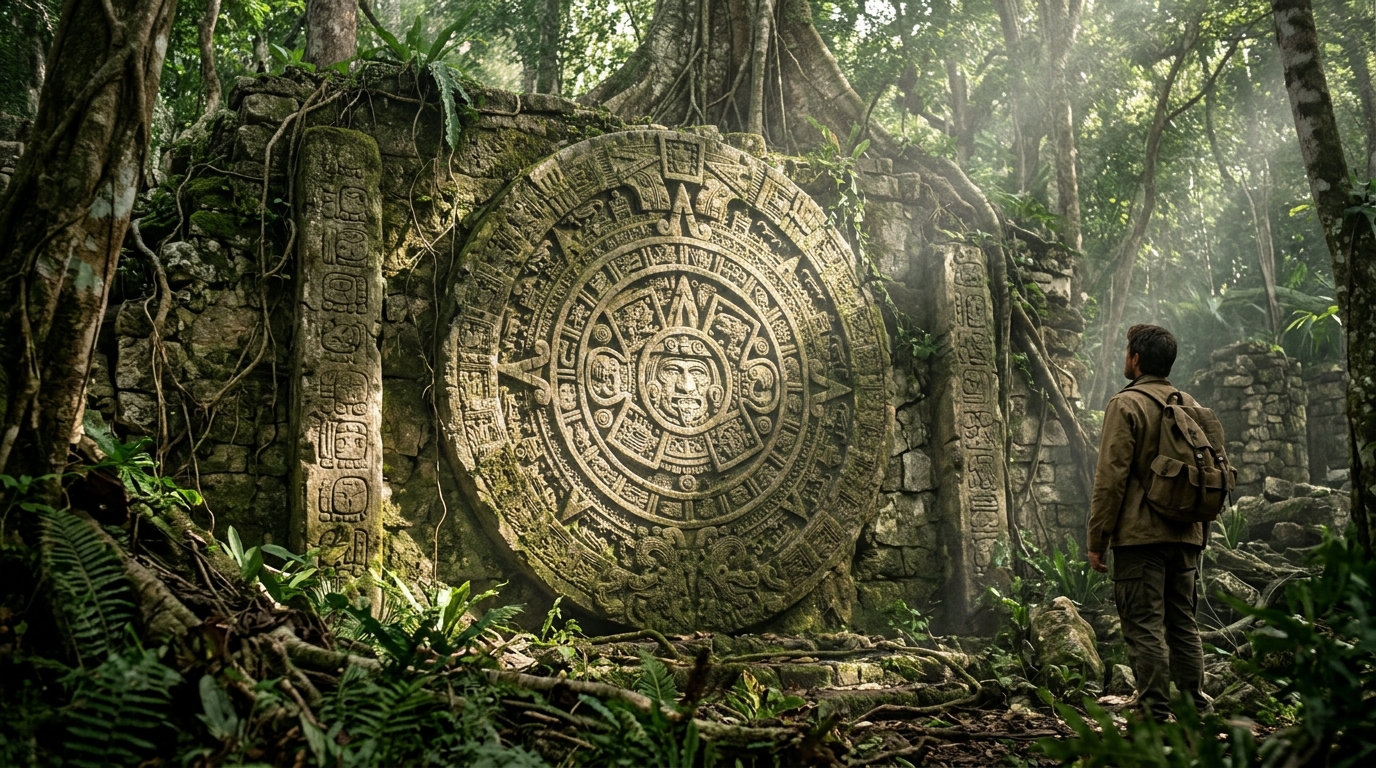
The Maya calendar system is a complex network of interlocking cycles that track time through spiritual, agricultural, and historical lenses. While the Tzolkin is the most famous component, it operates alongside the Haab and the Long Count to create a comprehensive temporal map. My Mayan Sign helps you navigate these cycles by connecting your birth date to the specific energies of the Tzolkin, which is the core of Mayan astrology.
The Haab: The Solar Cycle
The Haab is the 365-day solar calendar used by the Maya to track the agricultural year. It is divided into 18 months of 20 days each, plus a short period of five days known as the Wayeb. This structure allowed the Maya to align their planting and harvesting schedules with the sun's movement. The Haab is primarily a practical tool for observing the seasons rather than a spiritual guide.
Each month in the Haab has a specific name, such as Pop or Uo, which reflects the agricultural activities of that season. The five-day Wayeb period is considered a time of rest and spiritual danger, where the boundary between the living and the dead is thin. Understanding the Haab provides context for the physical environment in which the Maya lived and worked.
The Long Count: Historical Time
The Long Count is a linear calendar that records the passage of time from a specific creation date. It is used to mark significant historical events, such as the accession of kings or the completion of major monuments. The Long Count is composed of five units: kin, winal, tun, katun, and baktun. This system allows for the precise dating of events over thousands of years.
The most famous aspect of the Long Count is the end of the 13th baktun, which occurred on December 21, 2012. This date marked the completion of a major cycle, but it did not signify the end of the world. Instead, it represented a transition to a new era of consciousness. The Long Count continues to be used by modern Maya communities to track the passage of time and to connect with their ancestral heritage.
How the Cycles Interlock
The Maya calendar system is not a single calendar but a set of interlocking cycles that create a unique pattern every 52 years. This pattern is known as the Calendar Round, which combines the Tzolkin and the Haab. The Calendar Round ensures that no two days have the same combination of Tzolkin and Haab names for 52 years. This interlocking system allows the Maya to track time with both spiritual and practical precision.
The interplay between these cycles creates a complex web of meanings that can be difficult to navigate without guidance. For example, a day that is auspicious in the Tzolkin might be inauspicious in the Haab, requiring the user to consider both cycles when making decisions. This complexity is what makes the Maya calendar system so rich and rewarding to study.
The Tzolkin: The Astrological Core
The Tzolkin is the 260-day sacred calendar that forms the core of Mayan astrology. It combines 20 Day Signs with 13 Galactic Tones to create 260 unique day combinations. Each combination has its own distinct energy, which influences the character and life purpose of a person born on that day. The Tzolkin is the primary tool used in Mayan astrology to understand an individual's spiritual nature.
My Mayan Sign uses the Tzolkin to provide personalized readings that help users understand their strengths, challenges, and life path. The Tzolkin is not a fixed prediction but a mirror that reflects the user's inner world. By studying the Tzolkin, users can gain insight into their natural tendencies and learn how to work with their energy rather than against it. The Tzolkin is the most important component of the Maya calendar system for those interested in astrology.
Practical Application for Readers
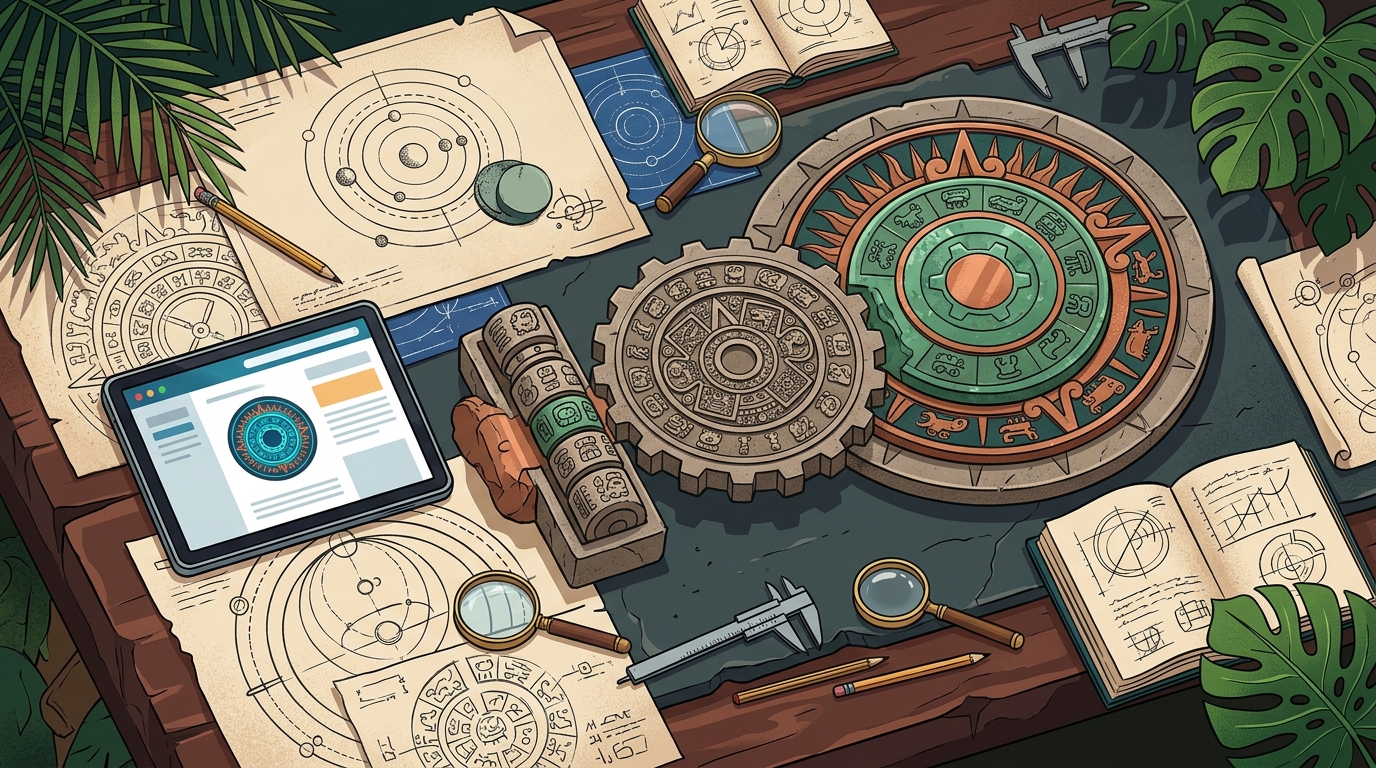
For most readers, the Tzolkin is the most relevant part of the Maya calendar system. It provides a framework for self-reflection and personal growth that can be applied to daily life. By understanding your Day Sign and Galactic Tone, you can make more informed decisions about your relationships, career, and spiritual practice. The Tzolkin is a tool for empowerment, not a source of fear or uncertainty.
Key Takeaways
- The Maya calendar system consists of three main cycles: the Tzolkin, the Haab, and the Long Count.
- The Haab is a 365-day solar calendar used for agricultural and practical purposes.
- The Long Count is a linear calendar that records historical time from a creation date.
- The Tzolkin is a 260-day sacred calendar that forms the core of Mayan astrology.
- The Calendar Round combines the Tzolkin and Haab to create a unique pattern every 52 years.
- My Mayan Sign provides a free tool to calculate your Tzolkin sign and tone.
- The Tzolkin is a mirror for self-reflection, not a fixed prediction.
Frequently Asked Questions
What is the difference between the Tzolkin and the Haab?
The Tzolkin is a 260-day sacred calendar used for spiritual and astrological purposes, while the Haab is a 365-day solar calendar used for agricultural and practical purposes. The Tzolkin tracks spiritual time, while the Haab tracks the movement of the sun.
How does the Long Count work?
The Long Count is a linear calendar that records the passage of time from a specific creation date. It is composed of five units: kin, winal, tun, katun, and baktun. This system allows for the precise dating of events over thousands of years.
What is the Calendar Round?
The Calendar Round is the interlocking of the Tzolkin and the Haab, which creates a unique pattern every 52 years. This pattern ensures that no two days have the same combination of Tzolkin and Haab names for 52 years.
Is the Tzolkin based on astronomy?
No, the Tzolkin is not based on astronomy. It was revealed through shamanic trance rather than by watching the sky. It tracks spiritual time, not the movement of the planets.
How can I find my Tzolkin sign?
You can find your Tzolkin sign by using a free calculator like the one provided by My Mayan Sign. You only need your birth date to calculate your Day Sign, Galactic Tone, and Trecena.
What is the significance of the 13th baktun?
The 13th baktun is a major cycle in the Long Count that ended on December 21, 2012. It marked the completion of a major cycle and the transition to a new era of consciousness. It did not signify the end of the world.
Can I use the Maya calendar for daily guidance?
Yes, you can use the Tzolkin for daily guidance by checking the current Day Sign and Tone. This can help you understand the energy of the day and make more informed decisions about your activities and interactions.