
Mayan astrology uses a 260-day Tzolkin calendar based on spiritual energy, while the Western zodiac relies on a 365-day solar year and planetary positions. My Mayan Sign provides a free calculator to help you explore these distinct systems. This guide covers how to choose, verify, and understand both frameworks for personal growth.
How to Choose: What Separates a Good Option from a Bad One
Choosing between Mayan and Western astrology depends on your goal. Western astrology is ideal for analyzing planetary influences on personality and timing. Mayan astrology focuses on spiritual evolution and the 260-day Tzolkin cycle. A good option aligns with your intent. If you seek a map for spiritual growth, the Mayan system is often more direct. If you want to understand planetary transits, Western astrology is the standard.
Defining the Core Difference
Mayan astrology is a spiritual system based on the 260-day Tzolkin calendar. Western astrology is a planetary system based on the 365-day solar year. The Tzolkin combines 20 Day Signs with 13 Galactic Tones. This creates 260 unique day energies. Western astrology uses 12 signs and 10 planets. The difference is fundamental. One tracks spiritual time, the other tracks astronomical time.
What to Ask: Specific Questions Before Committing
Before using any astrological tool, ask specific questions. Does the system use birth time? Western astrology requires birth time for accurate house placements. Mayan astrology typically uses only the birth date. Does the tool explain the methodology? A reliable source will clarify if it uses the traditional Tzolkin or a modern variation like Dreamspell. My Mayan Sign uses the traditional Tzolkin math. This ensures accuracy for those seeking the authentic Mayan perspective.
How to Verify: Checking Claims and Credentials
Verify the source of the astrological data. Check if the calculator uses a standard correlation constant. For Mayan dates, the GMT correlation constant is critical. My Mayan Sign uses the GMT 584283 constant. This aligns the Gregorian date with the Maya Long Count. If a site uses a different constant, your results may differ. Always check the methodology page. A transparent source will explain how it converts dates. This builds trust in the reading.
How It Works: The Process and Timeline
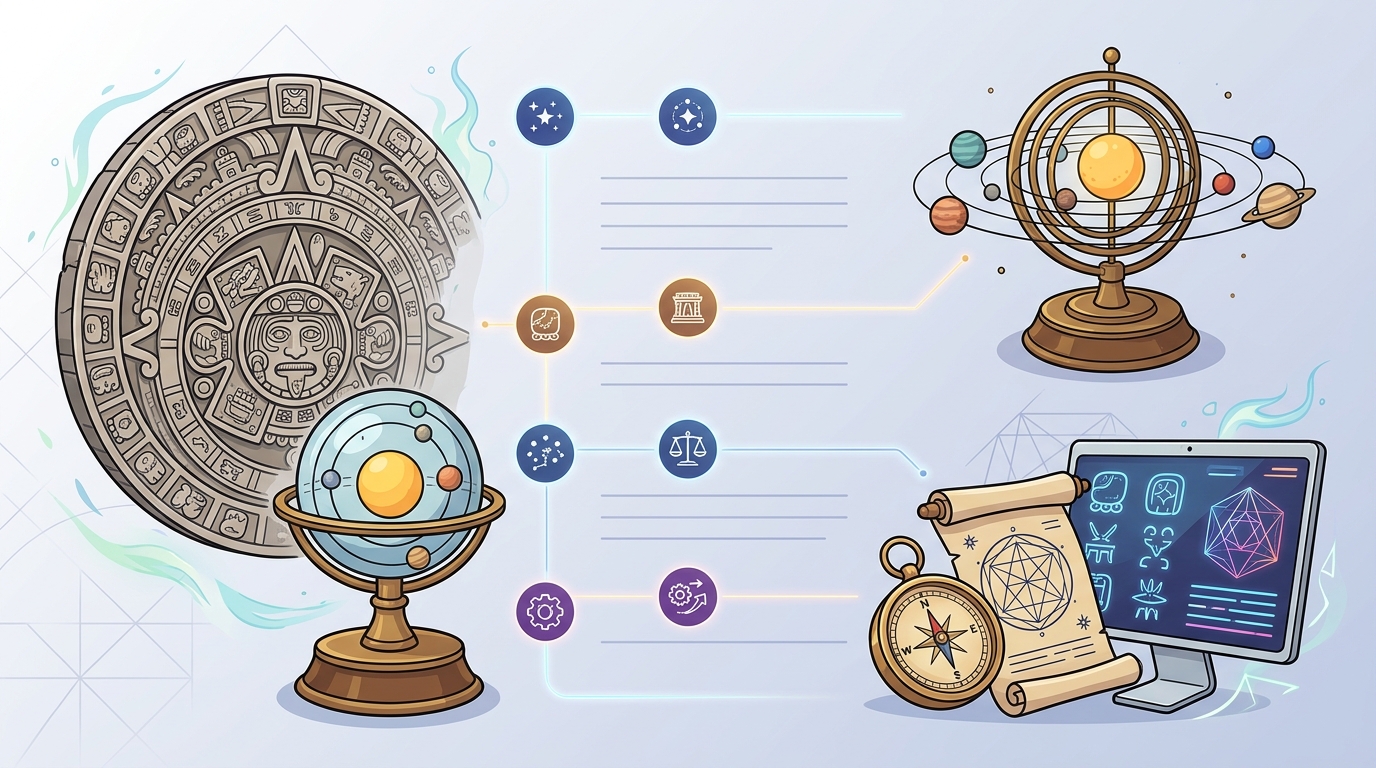
The process is simple for both systems. Enter your birth date. The calculator computes your sign. For Mayan astrology, you get a Day Sign, Galactic Tone, and Trecena. For Western astrology, you get a Sun, Moon, and Rising sign. The timeline is immediate. You receive results in seconds. The depth of the reading depends on the tool. A basic calculator gives a summary. A detailed report provides a full chart. My Mayan Sign offers both free and detailed options. This allows you to start simple and go deeper as needed.
What It Costs: Price Drivers
Costs vary by depth. Basic sign lookups are often free. Detailed reports cost more. Price drivers include the number of sections. A standard report covers the central sign and four directions. A detailed report adds eight directions and the Night Lord. My Mayan Sign offers a free calculator. Paid reports provide extended sections. The cost reflects the depth of interpretation. It is not a subscription. You pay for the specific report you need. This model is transparent and user-friendly.
What Goes Wrong: Common Mistakes
Versus Alternatives: Comparing the Systems
| Feature | Mayan Astrology | Western Zodiac |
|---|---|---|
| Calendar Basis | 260-day Tzolkin | 365-day Solar Year |
| Primary Input | Birth Date | Birth Date and Time |
| Core Elements | 20 Signs, 13 Tones | 12 Signs, 10 Planets |
| Focus | Spiritual Evolution | Planetary Influence |
| Origin | Shamanic Trance | Astronomical Observation |
This table highlights the key differences. Mayan astrology is about internal spiritual time. Western astrology is about external planetary movement. Both are valid. They answer different questions. Choose based on your intent.
For a Specific Situation: Personalized Context
Consider your specific situation. If you are exploring identity, Mayan astrology offers a clear mirror. It shows your natural strengths and challenges. If you are planning a business launch, Western astrology may offer better timing insights. The Mayan system is less about prediction and more about understanding. It is a map, not a territory. Use it for self-reflection. Combine it with practical planning. This balanced approach yields the best results.
Rules and Protections: Ethical Guidelines
Ethical guidelines apply to all astrological services. Readings are for reflection, not fortune-telling. They should not replace professional advice. My Mayan Sign emphasizes this distinction. The chart is a tool for self-awareness. It does not dictate your choices. You are the agent of your life. The sign is an invitation. This ethical framework protects users from fatalism. It empowers them to use the insights constructively.
Local Specifics: Regional Relevance
Local specifics matter less for Mayan astrology than for Western. Western astrology uses local time for house calculations. Mayan astrology uses the date. This makes it more universal. However, cultural context influences interpretation. In the USA, Mayan astrology is often explored for spiritual growth. It is not tied to a specific region. The Tzolkin is a global tool. My Mayan Sign serves users worldwide. The principles remain consistent regardless of location.
Timing: When to Act
Timing is crucial in astrology. In Western astrology, transits indicate when to act. In Mayan astrology, the current day sign influences the day. Check today's Tzolkin sign. It provides a daily energy guide. This is not for major life decisions. It is for daily awareness. Align your actions with the day's energy. This practice builds rhythm. It helps you flow with the calendar. Timing in Mayan astrology is about presence, not prediction.
Results Over Time: Long-Term Outcomes
Long-term outcomes depend on consistent practice. Regularly checking your sign builds awareness. You start to notice patterns. You see how your energy shifts. This leads to personal growth. The Mayan system is a lifelong study. It offers depth. As you mature, your understanding deepens. The chart remains the same. Your interpretation evolves. This is the true value. It is a mirror that grows with you. My Mayan Sign supports this journey with detailed reports.
Key Takeaways
- Mayan astrology uses the 260-day Tzolkin calendar.
- Western astrology uses the 365-day solar year and planets.
- Mayan signs require only a birth date.
- Western signs require birth date and time.
- The Tzolkin combines 20 signs and 13 tones.
- My Mayan Sign uses the GMT 584283 correlation constant.
- Readings are for reflection, not fortune-telling.
- Consistent practice leads to long-term personal growth.
Frequently Asked Questions
What is the main difference between Mayan and Western astrology?
Mayan astrology is based on the 260-day Tzolkin calendar and spiritual energy. Western astrology is based on the 365-day solar year and planetary positions.
Do I need my birth time for Mayan astrology?
No. Your Day Sign comes from the date alone. Month, day, and year are all you need.
What is a Galactic Tone?
A Galactic Tone is a number from 1 to 13 that pairs with your Day Sign. It describes how strongly the energy moves.
Is Mayan astrology accurate?
It uses traditional Tzolkin math. The Day Sign and Tone are correct. The readings are interpretations for reflection.
Can I look up other people's signs?
Yes. The calculator is free and unlimited. You can look up partners, family, or friends.
What is the Mayan Tree of Life?
The Mayan Tree of Life is your personal chart. It includes your Day Sign and eight supporting signs in four directions.
Conclusion
Understanding the difference between Mayan and Western astrology empowers you to choose the right tool. My Mayan Sign provides a reliable, free calculator for the Tzolkin. Explore your Day Sign and Galactic Tone today. Discover your unique energy pattern. Start your journey with My Mayan Sign.